

The Top 5 Breakdowns in Construction Schedule Management
Schedule management involves navigating a complex landscape of risks that can significantly impact project budgets and timelines.

Blog

Most construction projects fall behind at some point, and when they do, project managers reach for schedule compression techniques to recover lost time. Crashing and fast tracking are the two best-known compression techniques, and both can work.
The harder question is rarely which technique to use. It is whether the compressed plan can actually be built. A project schedule that looks recovered on paper but cannot be executed in the field will not save the project. The result is missed project timelines, strained crews, and disputes over who caused the slip.
This guide breaks down the core techniques, when crashing and fast tracking each fit, why they fail, and how to confirm the project schedule is realistic before crews begin.
Schedule compression techniques are project management methods used to shorten a project's duration without changing the project scope. The same volume of tasks is completed in less time, usually to recover lost time or hold a project end date.
In construction, schedule compression shows up as crashing (adding resources to critical path activities), fast tracking (running tasks in parallel that were planned to be completed sequentially), trade stacking, and resequencing.
Schedule compression differs from rebaselining, which resets the original schedule, and from cutting project scope, which removes work. Compression keeps the same tasks and forces them into a shorter time. That is why these compression techniques carry more risk than either alternative.
Project managers should compress a project schedule when a fixed end date is at risk and cannot be moved. Common triggers include:
Schedule compression works best as a deliberate decision rather than a habit. AACE International guidance on recovery scheduling treats a recovery plan as a revision of logic and resources that both contractor and owner can review as reasonable. A recovery plan that cannot be justified on those terms creates more exposure than it resolves.
The most common methods to shorten a project schedule are crashing, fast tracking, resequencing tasks, and reducing project scope. They break down as:
Crashing and fast tracking keep scope intact and act on the critical path directly. Each of these compression techniques changes the schedule's logic, task durations, or resources, and so changes the project's risk. The choice is less about which method is fastest and more about which the project team can absorb without breaking quality standards.
Crashing and fast tracking solve the same problem in opposite ways. Crashing buys time with project costs by adding resources, shifts, or equipment to critical path activities. Fast tracking buys time with risk by running project tasks in parallel that were planned to be completed sequentially.
The table below compares the two most common techniques on the factors that matter most on a construction project.
|
Factor |
Crashing |
Fast Tracking |
|
What it changes |
Adds resources to existing tasks |
Overlaps tasks completed sequentially |
|
Effect on project costs |
Higher direct costs from labor and overtime |
Few additional costs |
|
Primary risk |
Diminishing returns and congestion |
Rework from out-of-sequence work |
|
Best fit |
Critical path tasks that respond to more resources |
Tasks that can safely run in parallel |
|
Failure mode |
Trade stacking until the project team loses productivity |
Crews start work before predecessors finish |
Crashing adds resources to critical path activities so the project finishes sooner. Crashing is the right technique when the constraint is capacity and the tasks genuinely respond to extra resources. The limit on crashing is diminishing returns. Doubling a crew rarely halves task durations, and crashing by stacking too many trades drives congestion, safety risk, and falling productivity.
Overtime is a form of crashing, and sustained long weeks reduce output per hour rather than helping the team complete the project sooner. When project managers build a crash schedule, the aim is to add new resources only where the critical path will actually move.
Fast tracking overlaps tasks that were planned to be completed sequentially so they run in parallel. Fast tracking often costs little in direct project costs, which makes fast tracking attractive to project managers, but fast tracking trades those savings for more risk.
Fast-track projects start one activity before its predecessor is finished, which can mean building on incomplete work, and on fast-track projects, rework can erase the time the parallel work was meant to save. Fast tracking also raises coordination demands because running fast tracking and crashing at once means more handoffs to manage. Done with discipline, fast tracking shortens project timelines with few additional costs; done carelessly, fast tracking adds both cost and risk.
Schedule compression techniques fail most often because the compressed plan is never tested for feasibility before the project team commits to it. Three failure modes show up repeatedly:
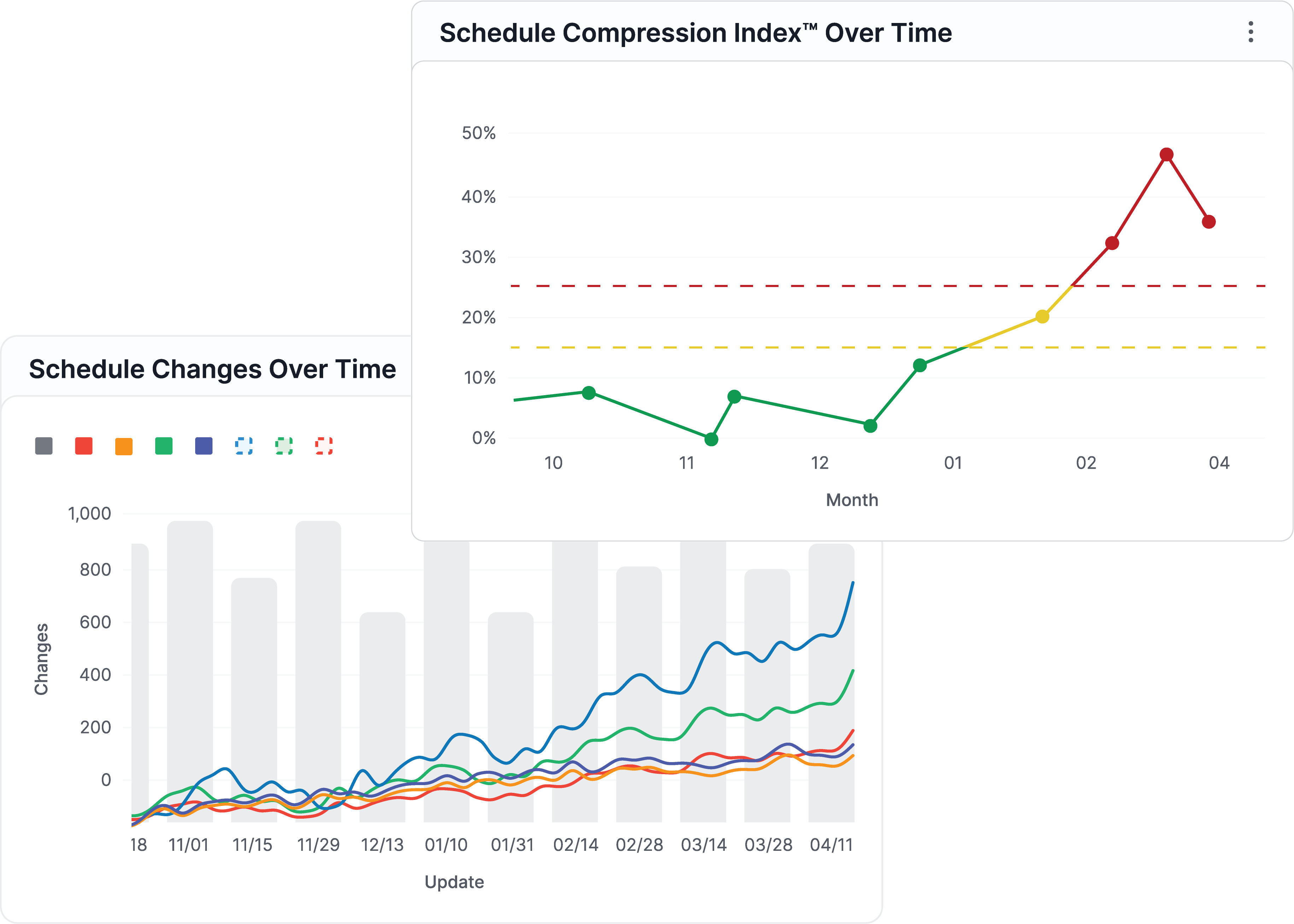
Demanding more tasks in the remaining time than any project crew can complete. SmartPM's own analysis of schedule compression found that compression above roughly 25 percent signals a project schedule that has likely moved beyond what is achievable.
Applying recovery logic to a schedule full of missing logic, open ends, or hard constraints. Best practices in the GAO Schedule Assessment Guide stress that a reliable schedule has to rest on sound CPM logic.
Relying on optimism over real time data on whether the new plan holds.
Each failure ends the same way: a project schedule that says on time while the field tells a different story.
Worried your last recovery plan was optimism rather than a schedule you could build? See how SmartPM measures schedule compression and flags an unrealistic plan before it reaches the field. Request a demo.

The safest way to compress a project schedule is to document the compression logic so it stands up to review by every stakeholder on the project. Schedule compression and delay claims are closely linked, because acceleration changes who is responsible for lost time and project costs. When a contractor is directed to build a crash schedule without a time extension, the resulting acceleration can drive productivity loss that later becomes the basis of a dispute among stakeholders.
A defensible recovery plan records:
That shared, factual record keeps the contractor, owner, and team on the same page and keeps the project's data ready.
Accelerating project timelines without extra costs usually means fast tracking rather than crashing, since overlapping tasks avoids the labor and equipment premiums that crashing requires. The honest caveat is that fast-tracking trades costs for risk, and rework from overlapping the wrong tasks can erase the savings. The most reliable way to hold both schedule and project costs is to identify compression early, before delay forces crashing late in the project. Early detection through real-time data is what keeps acceleration affordable.
A compressed schedule is achievable only when the data shows the remaining tasks fit the remaining time and resources. A platform that runs a full Critical Path Method (CPM) engine against schedule data can quantify how much compression a project demands, grade the original schedule, and project a realistic completion date from observed progress.
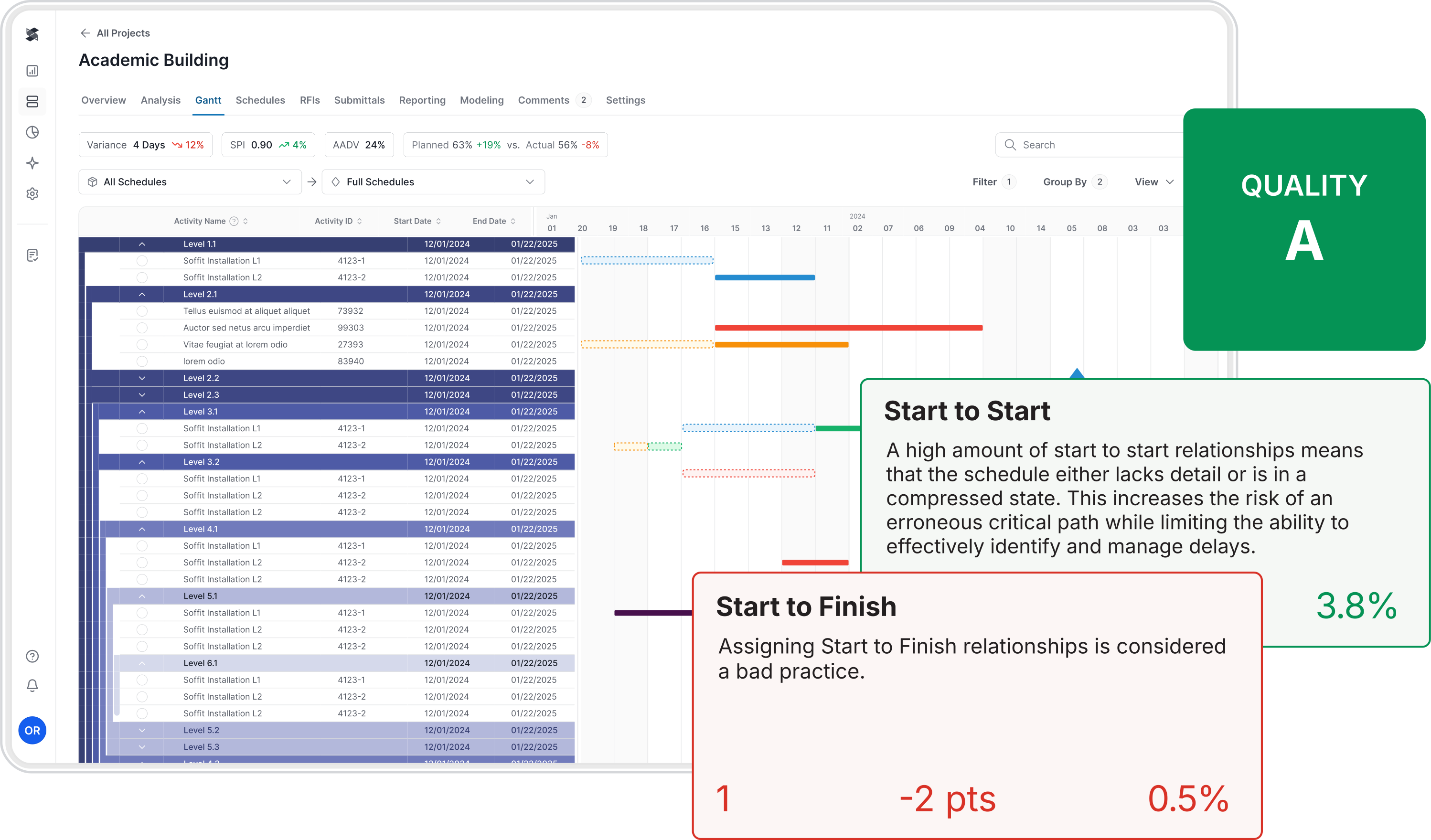
SmartPM's schedule compression analysis measures compression update over update, so project managers see stress building before it becomes delay and decide whether to add resources, resequence, or reset project timelines. SmartPM is a schedule analytics layer that works on top of P6, MS Project, and the Gantt chart views project teams already use, reading the same Gantt chart logic to make those schedules more useful without replacing them.
Satterfield & Pontikes Construction, a SmartPM customer, has credited the platform with helping mitigate end-date slippage and complete the project on time while building higher-quality baseline schedules. Better original schedule quality is what makes any later compression analysis trustworthy.
Want to know whether your compressed schedules are achievable before you commit crews to them? Request a demo or contact SmartPM to see schedule compression analysis in action.