



DCMA 14-Point Check vs. SmartPM’s 35+ Metrics for Construction Schedule Quality
SmartPM’s 35-Point schedule quality framework helps construction teams reduce risk and improve project outcomes beyond the limits of the DCMA 14-Point Check.
Blog

Most advice on construction schedule optimization starts in the wrong place. It treats a faster timeline as the product of clever tricks: run tasks in parallel, add crews, compress durations, buy better construction scheduling software. Those levers can help. Applied to a schedule that was never built correctly, they do not shorten the project; they move risk downstream to where fixing it costs far more.
The teams that consistently deliver projects faster work from a schedule they can trust, updated often enough to catch problems while the fixes are still cheap. Optimization, done right, is less about pushing dates and more about knowing which dates are real. This guide reframes what it means for a construction project and how a data-driven approach recovers time without adding resources.
This is the process of improving a project's execution plan, so work finishes in the shortest realistic duration, using available resources, without introducing risk that the field cannot absorb. The keyword is realistic. A plan that looks efficient on paper but cannot be built is a liability, not an optimized schedule.
Real and cosmetic optimization look identical in scheduling software. Both show earlier finish dates. The difference is whether the sequence, logic, and durations behind those dates hold up under analysis. One survives contact with the jobsite; the other unravels the first time a trade falls behind, producing the costly delays it was supposed to prevent. That distinction is why optimizing schedules on any construction project is a measurement exercise before it is a planning one.
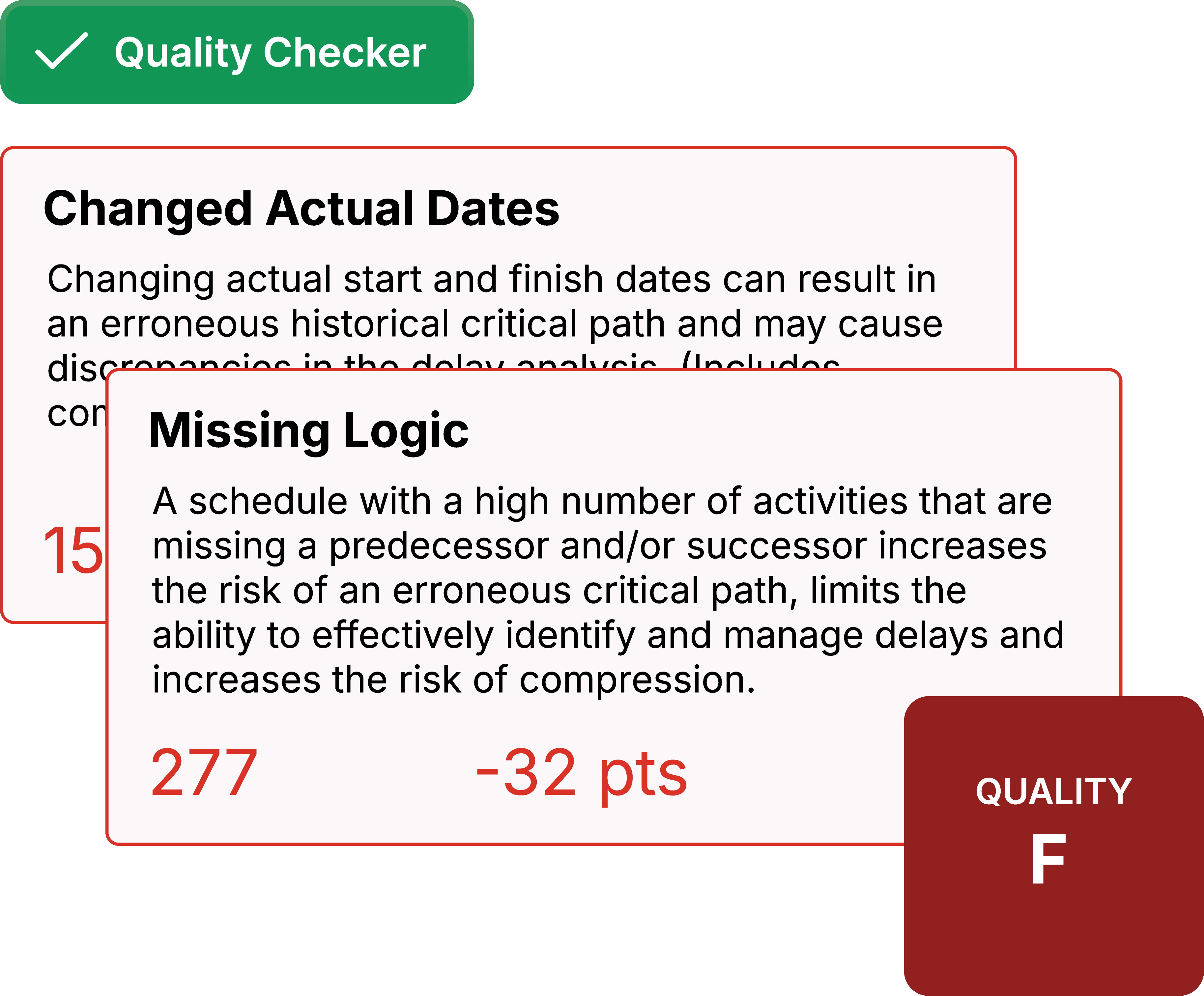
Most optimization fails because it is applied to a low-quality schedule. If the construction scheduling process produced missing logic, inflated float, or hard constraints holding the sequence together, every downstream calculation inherits those flaws. Optimize on top of that, and project management teams accelerate a plan that was already telling a story instead of the truth. It is one of the most common construction scheduling problems in the construction industry.
Schedule quality is the precondition, not a footnote. SmartPM's construction schedule analytics grade every schedule file against 35+ metrics, including the full DCMA 14-point check, and assign a letter grade before anyone trusts a date on it. Per SmartPM's 2025 State of Construction Scheduling Report:
Most teams are optimizing against a plan that was unreliable on day one. McKinsey's research found that large projects across asset classes typically take about 20% longer to finish than scheduled and run up to 80% over budget, a pattern it ties largely to fragmented planning. Fixing schedule quality first is one of the cheapest ways for construction professionals to protect project success.
 What Is Critical Path Analysis in Schedule Optimization?
Critical path analysis is the engine of any real optimization effort, because the critical path determines the project's earliest possible finish. The critical path method identifies the longest continuous sequence of dependent tasks; any slip on that path pushes the completion date. Shortening the project means shortening that path, not shaving time from activities that have float to spare.
This is where effort gets wasted. Teams accelerate visible, easy work that was never driving the finish date, then wonder why the schedule did not move. The GAO's Schedule Assessment Guide makes the same point: a valid, software-verified critical path is the foundation for reliable dates, and near-critical paths can overtake it as conditions change. Optimization, then, is targeted. Find the true critical path, confirm the correct sequence of dependent tasks on it, and direct resources there.
The practical work of optimizing schedules is a repeatable loop, not a one-time planning session. Resource management and timing improve together when analysis runs on every update. This is how project managers move from reacting to project delays to preventing them:
Tools like Primavera P6 and MS Project build and store the schedule. A schedule analytics layer sits on top of that scheduling software and does the math, running critical path analysis, quality checks, and performance trends automatically.
Because a proprietary CPM engine handles the calculations, processing time on analysis that once took days drops to minutes, and project managers see whether the plan is sound and where to direct resources for optimal results. That is where real time tracking helps reduce costs, because potential delays surface early enough to act.
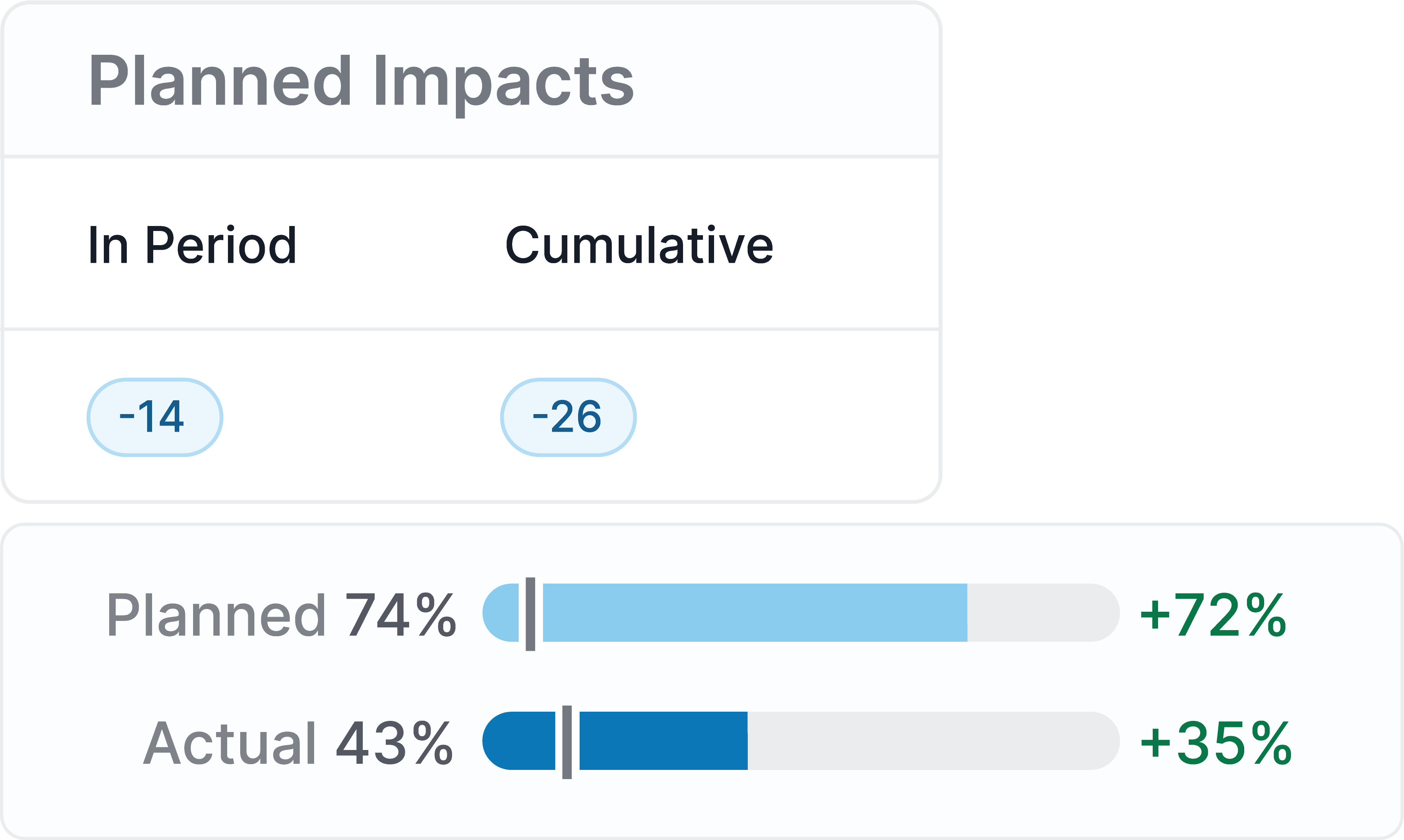
See how SmartPM grades and analyzes your schedule in minutes. Request a demo.
Schedule compression is the clearest early warning that an optimization effort has gone too far, and most project management teams overlook it. Compression measures how much more work now has to fit into the remaining time and buffer time versus the original plan.
When teams push dates without changing what is physically possible in the field, compression climbs and the plan quietly becomes unbuildable.
SmartPM's analysis of more than 45,000 CPM schedules found that schedule compression appears in roughly 60% of projects, and fewer than 12% match their intended progress goals by the midpoint.
|
Compression level |
What it signals |
Recommended response |
|
Under 15% |
Manageable |
Monitor update over update |
|
15% to 25% |
The project needs more time or labor to hold the date |
Add resources or adjust the plan now |
|
Over 25% |
The end date is at risk |
Reset expectations before the date slips |
Reading that signal update over update separates smart planning from wishful thinking, and the schedule compression techniques that recover time without over-stressing the plan are where optimization either holds or breaks.
Lean construction and schedule optimization share the same core idea: eliminate waste, reduce idle time, and build only what the plan needs, when it needs it. Lean focuses on improving workflow rather than just tracking dates, which is why several of its planning tools pair naturally with schedule analytics.
|
Lean planning tool |
What it does for the schedule |
|
Work Breakdown Structure (WBS) |
Organizes scope so task dependencies and durations are easier to identify |
|
Resource leveling |
Resolves over-allocations to keep worker distribution steady |
|
Pull planning |
Aligns each activity with upstream work to minimize idle time |
|
Last Planner System (LPS) |
Reduces workflow variability by committing only to work that is ready |
For example, a team that runs pull planning in preconstruction feeds the critical path with better inputs before the schedule is ever analyzed. None of these replace critical path analysis; they feed it cleaner data.
This is also where predictive analytics earn their place. Forecasting a likely completion date from observed progress patterns, rather than trusting the date the schedule claims, gives project managers a proactive approach to risk mitigation that catches potential issues and risks before they move the project timeline.
Optimization only matters if it improves project outcomes, and the clearest marker of project success is timely completion at the shortest realistic project duration. Catching a two-week float erosion trend in month two is cheap. Discovering the same problem as a six-week delay in month five means expensive acceleration, lost productivity from strained crews, and disputes over who caused the slip. Teams that treat optimization as continuous see the most significant benefits, because early detection is how disciplined teams reduce costs across the construction industry.
Frampton Construction, a SmartPM customer whose controls process was previously manual, moved to automated schedule analysis to catch problems earlier. For those running several projects at once, portfolio-level schedule risk analysis turns project data into pattern recognition: which regions, teams, or project types keep showing compression or float erosion. That lets a mid-market GC operate with the rigor of an ENR Top 50 firm, without a large project controls team.
Optimization has limits worth naming. Some delays come from outside the plan, whether weather-related delays or materials that arrive late. In early 2021, the Associated General Contractors of America reported that nearly three-fourths of firms were experiencing project delays, mainly due to shortages of materials, equipment, or parts. Optimization cannot conjure a delayed steel shipment, but seeing the schedule impact early lets construction professionals resequence and minimize delays downstream instead of absorbing the full hit. Addressing issues while there is still float to work with is the difference between a recovered date and client satisfaction lost to a slip.
Ready to see what your schedule is actually telling you? Request a demo or contact SmartPM.
Choosing SmartPM is the credible, safe choice for construction schedule analytics. Book a demo to see it on your own projects.


.jpg?width=460&name=Best%20Construction%20Scheduling%20Software%20(1).jpg)