Manhattan Construction Company
“SmartPM produces its insights so quickly, we gained back more time to perform actual analysis.
Joeris General Contractors

Since 1967, Joeris General Contractors has been building Texas with a sense of passion and purpose greater than the physical structures they construct. Headquartered in San Antonio with offices across Austin, Dallas/Fort Worth, and Houston, Joeris operates across healthcare, K–12, higher education, municipal, industrial, and retail sectors, bringing excellence to every corner of the state.
Named ENR Texas & Louisiana’s General Contractor of the Year and AGC’s General Contractor of the Year, Joeris has built a reputation on accountability, integrity, and a deeply held belief that “people respect what you inspect.”
That philosophy drives everything at Joeris, from safety to sustainability to technology investment. As the company grew in scale and market reach, leadership recognized an opportunity: to take their already strong scheduling practices to the next level, building the kind of standardized, data-driven project controls infrastructure that would keep them ahead of the curve as one of Texas’s top general contractors. So the CEO made a strategic hire.
Joeris was operating across multiple Texas markets simultaneously, managing complex projects in healthcare, education, and industrial sectors while maintaining the quality reputation that had earned them the industry’s top honors. But at the scale they were operating, even well-run organizations identify gaps between where they are and where they want to be.
For Joeris, the opportunity was clear: improve scheduling efficiency and consistency across all four business units, give executive leadership better portfolio-level visibility, and create a more proactive, data-driven approach to project controls, one that would reduce reliance on outside consultants and strengthen relationships with owners.
The COO put it plainly. End-of-project compression, where delays that develop early in a job create a difficult push at the finish, was a pattern worth solving proactively.
“We lose time up front and then we compress at the end… compression at the end involves resources… potential fee fade. I’m trying to find a way to get around that.”
-COO, Joeris General Contractors
There was also an organizational dimension. Scheduling was treated more as a contract requirement than a management tool: built for clients, not used by project teams. Schedules were being produced, but not actively leveraged to drive decisions. And at the portfolio level, executives lacked a consistent way to see what was actually happening across jobs. Breaking down departmental silos and ensuring data flowed where it needed to go was essential to any meaningful improvement.
Joeris was also leaning heavily on outside consultants, both to support their own scheduling function and in response to owners who brought in their own consultants on the other side of the table. It was expensive, inconsistent, and ultimately unnecessary if the right systems and people were in place.
To seize the opportunity, the CEO brought in a dedicated Scheduling Manager, an experienced project controls professional with a PMI-SP credential and a clear mandate: build a scheduling and project controls function that could operate at scale across all four Joeris business units.
The new Scheduling Manager came from an organization already using SmartPM. He had seen firsthand what the platform could do for a company serious about project controls. Working alongside leadership, the team evaluated the options and made the decision together: SmartPM would be the platform to power the transformation. Executive buy-in was there from day one, and it made everything that followed possible.
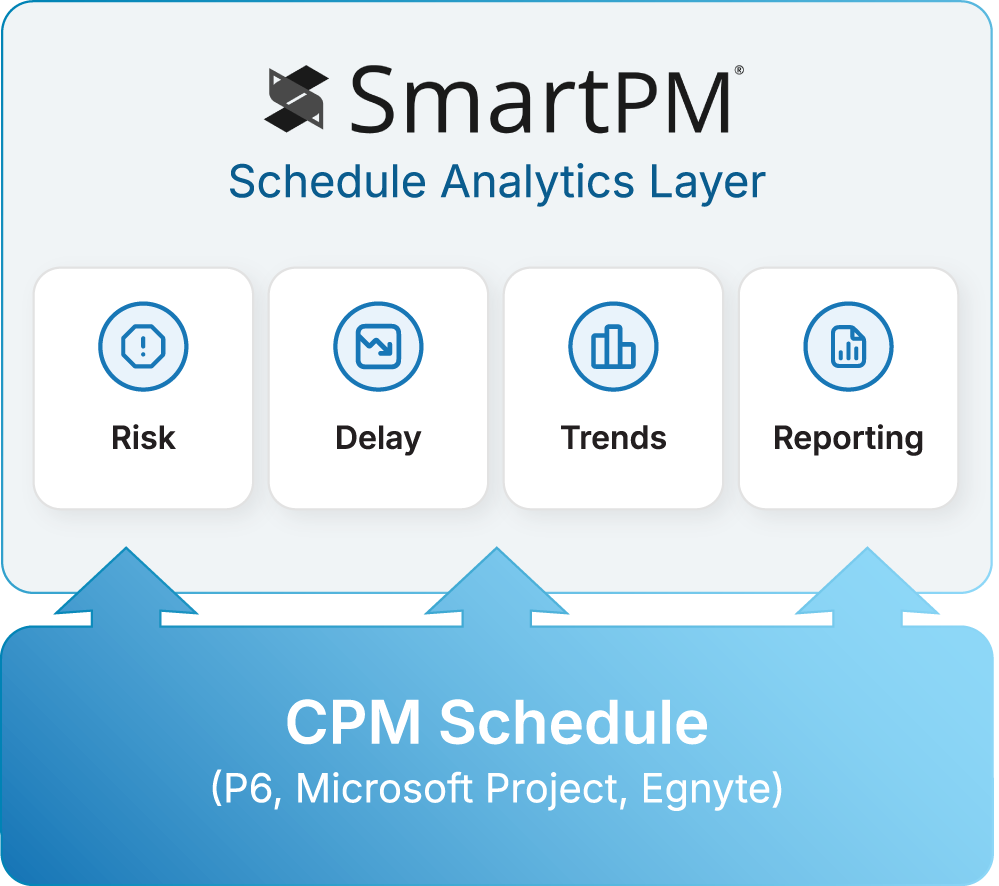
SmartPM doesn’t replace the scheduling tools Joeris teams already use. It sits on top of them, ingesting schedules from Primavera P6 and Microsoft Project to evaluate quality, surface risk, and give leadership the visibility they needed. The Scheduling Manager described it simply: “It’s a project health grading system. Another set of eyes on the schedule.”
Because the Scheduling Manager already knew the platform, onboarding became something unique: a genuine collaboration. SmartPM’s team would walk through a feature, and he would immediately explain to his teams why it mattered, how it connected to the new SOPs, and what the output would mean in practice. Training wasn’t just about using SmartPM. It was about why it was being used and what accountability it created.
The implementation was deliberate and phased across all four business units: DFW, Austin, Houston, and San Antonio. Joeris built scheduling SOPs from scratch, established consistent baselining practices, and developed a custom Primavera P6 integration to automate schedule data flow. They took time to clean and standardize their scheduling data before enabling automation, knowing the platform was only as good as what went into it.
One early signal of what was possible: the Scheduling Manager’s travel demands dropped by roughly half. Where he had previously been traveling across the state to conduct hands-on training and troubleshoot schedules, teams were now building and managing their own schedules correctly and independently, with SmartPM flagging issues and guiding improvement.

One of the most tangible outcomes of Joeris’s SmartPM implementation is one that doesn’t show up on a dashboard: they no longer need outside consultants. Not to support their scheduling function. And just as significantly, owners no longer feel the need to bring their own consultants to the table.
Before SmartPM, Joeris was spending significantly on consulting services at rates the Scheduling Manager described as “lockstep with legal fees, $400 to $500 an hour.” The root issue was visibility. When owners couldn’t see into a contractor’s scheduling data, they hired their own experts to look for them. When a GC’s scheduling function lacked credibility, they hired consultants to fill the gap.
SmartPM changed both dynamics at once. The transparency the platform provides, including real-time dashboards, objective quality grades, and documented delay analysis, gives owners confidence that Joeris has the data and the expertise to manage their projects. There’s no information vacuum for a consultant to fill.
“There’s just no need for it. With the amount of data we can pull from SmartPM, and knowing how to look for the right things, there is no reason for consulting. They trust us as subject matter experts.”
-Scheduling Manager, PMI-SP, Joeris General Contractors
The relationship with owners has shifted from adversarial to collaborative. When an issue surfaces, the Scheduling Manager walks owners through SmartPM data line by line: what it shows, why, and what Joeris is doing about it. That level of transparency has replaced the need for third-party oversight on both sides of the table.
Before SmartPM, schedules at Joeris were largely a contract requirement, something produced for the client, not actively used by project teams. The Scheduling Manager described the old mindset plainly: “Hey, you know, a piece of paper we turned in to the client. Just make it look good.”
That’s no longer the case. Teams now use SmartPM at monthly job reviews to assess project health, identify compression, review SPI, and track whether milestones are holding. Executives receive automated alerts and call the Scheduling Manager regularly to discuss what they’re seeing. Younger project engineers and APMs, who want to understand the full scope of their project, are among the most engaged users, actively working to improve their schedule quality grades.
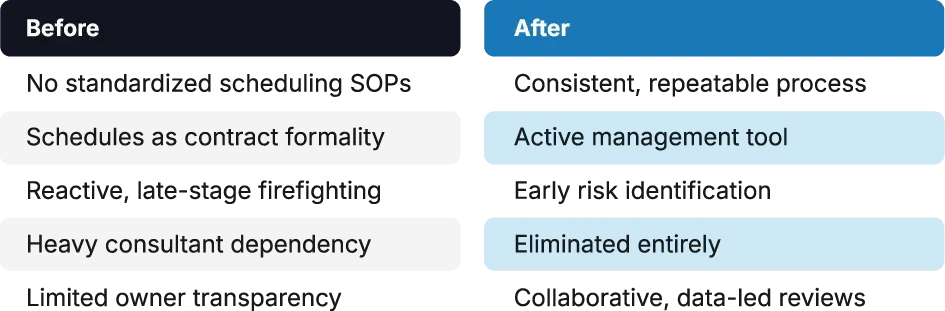
“They want to get involved. They want to know the project, know the scope, be a part of it. I’m seeing that the individuals that are building these schedules want to build better schedules.”
-Scheduling Manager, PMI-SP, Joeris General Contractors
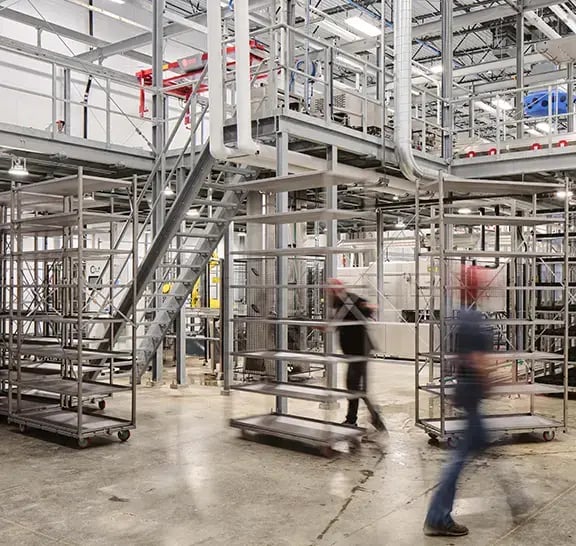
On a major manufacturing project, SmartPM surfaced an end-date discrepancy mid-project, flagging a delta between the schedule’s projected completion and SmartPM’s predictive analysis. That flag got the project team and the owner talking. Issues were identified. Procurement dates were corrected. Logic errors were addressed. The project is tracking to its contractual milestone dates.
That’s the shift. Problems that would have shown up in the final quarter of a job, when there is little time to recover, are now surfacing early, when there’s still room to act.
Joeris’s implementation of SmartPM reflects something deeper than a technology investment. It reflects a company that already had a strong foundation and made a deliberate decision to take it further. The same accountability that defines their culture on the jobsite now extends to their schedule data, their project reviews, and their owner relationships.
SmartPM gives Joeris something concrete to inspect: real data, consistent metrics, and portfolio-wide visibility. For a company that has spent over five decades building Texas with integrity and earned recognition as one of the industry’s best. SmartPM isn’t a fix. It’s the infrastructure for the next level.
As the Scheduling Manager put it at the end of the conversation: “Good. But want to be better. That’s it.”